TEMP HOUSE
Specifications | Khái quát
Location
Dong Ha city, Quang Tri, Vietnam
Program
house
Design Year
2016
Status
conceptual
Design Firm
MODS
- Architect
N Quang Dau
Site Area
216 m2 (8x27)
Build Area
106.7 m2
GFA (gross floor area)
122 m2
-------------------------------------------------
Description
THUYẾT MINH Ý TƯỞNG
Most of people guess "temp" is "temporary" because it is a common abbreviation and also the name of a folder commonly found in computer operating systems. Exactly, the character "temp" of this project name is abbreviated from "temporary".
---
Was designed for a small family of four members, the concept of the house originated from what the owners told the architect that how to design and build their future home in a minimal investment which includes the reusing old furnitures, where they plan to live in at least ten years. Later time, more functions would be probably added because the children must have got older. In that case, the house height would be raised to have one more floor above the parents-bedroom to be a new room for their girl who is now so little and shares her room with the parents; perhaps there will be another floor with the same level above the current kitchen, for the family room. In another possibility, if the owners get enough for the fund, they will be able to sell this house to a small family just like them now, to live in a new one. These are why the project is considered as a temporary building design -“Temp House”. For one thing, it is close to the meaning of "temporary", but we shouldn't draw preliminarily a "makeshift" house so that when the owner saves more capital, they can either demolish it without much regret or build continuously a new one on the old one in a patchwork situation, except for one case where the architects knew for sure that they were going to design a specific structure that would be dismantled in the near future like a camp.
images of existing site


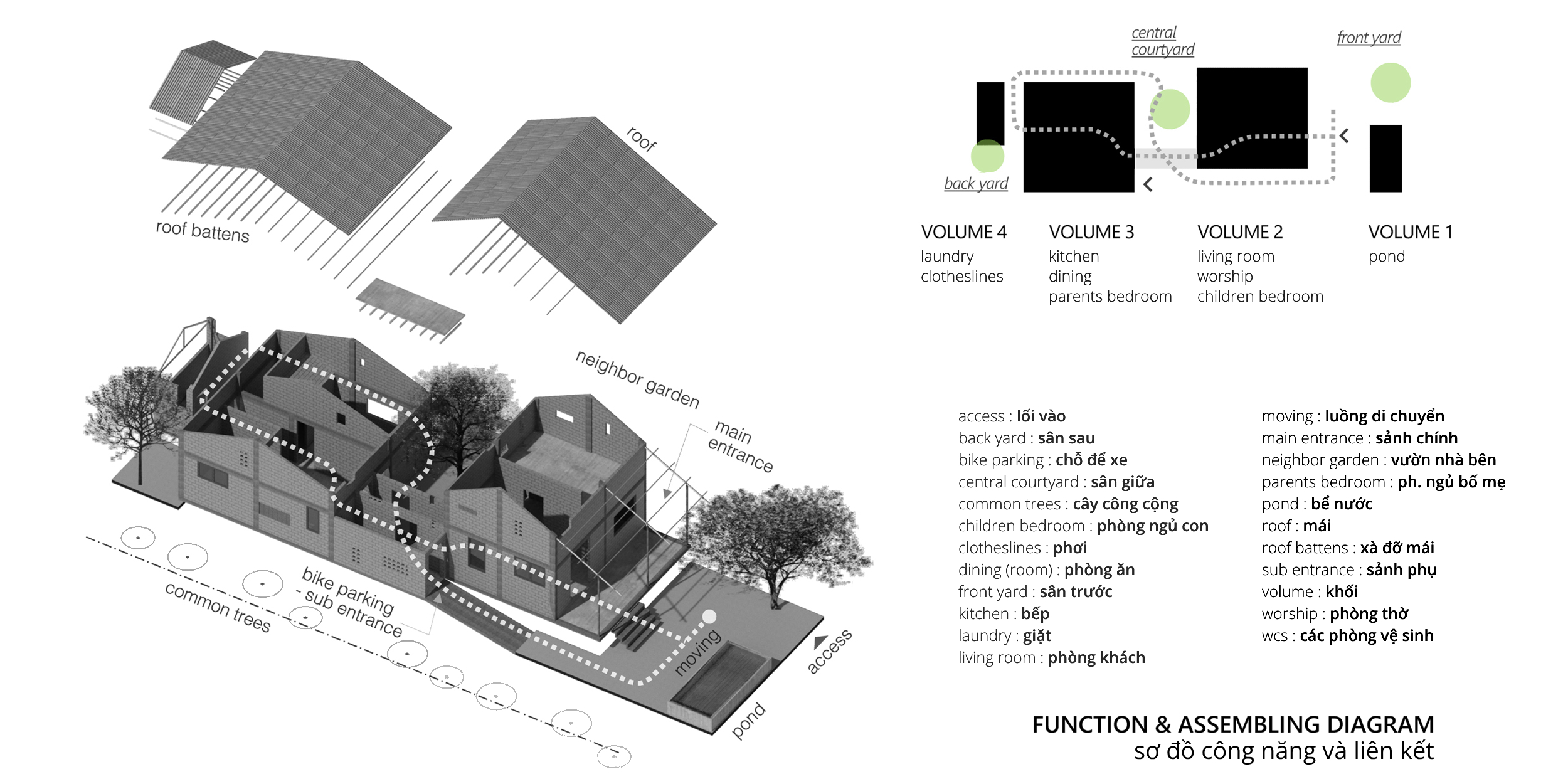
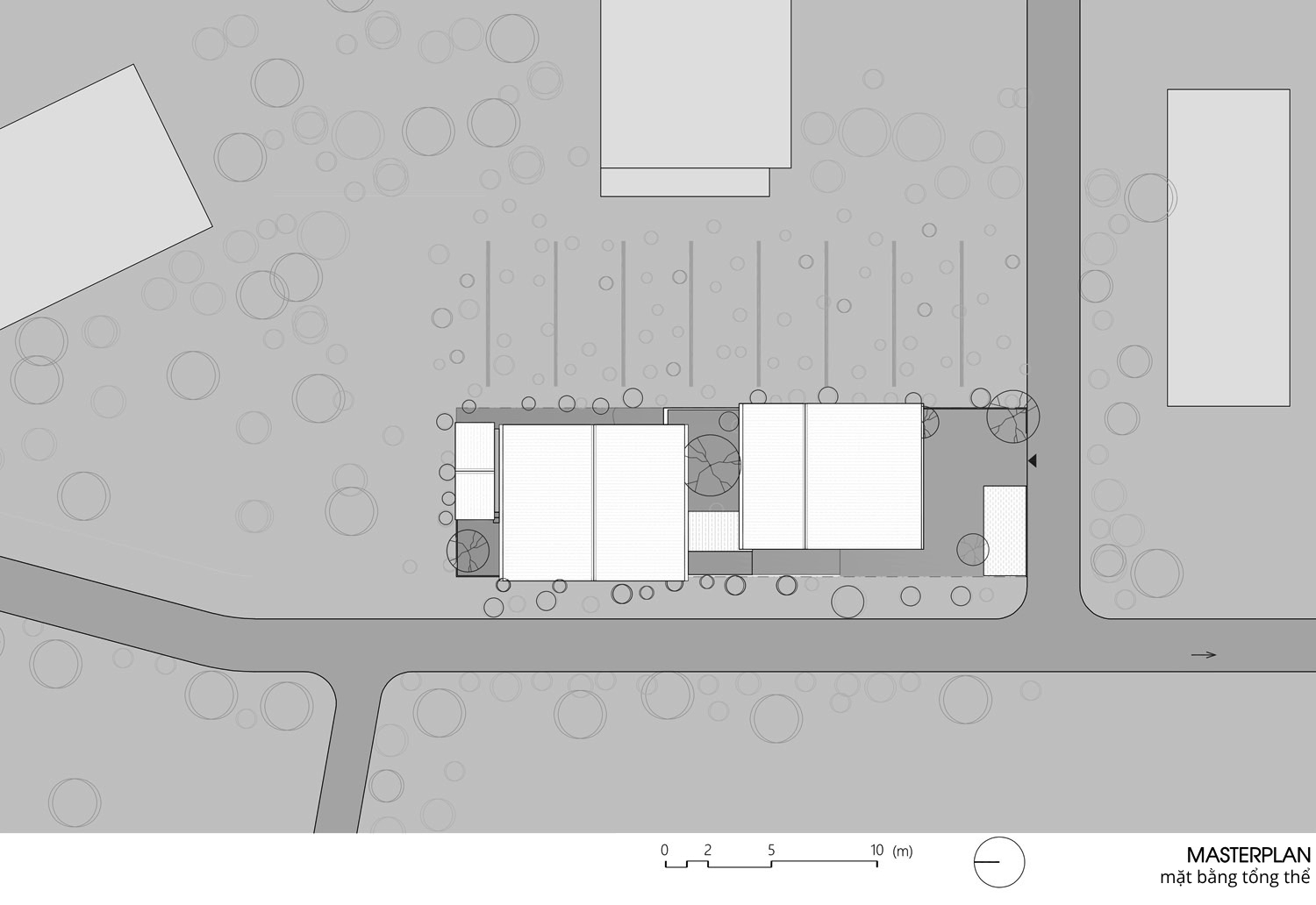
The owners used to imagine their future home like an unified block in its land and needed the architect to improve their intention to be an architecture concept. It could have become something further but the architect advised them to firstly try another way which is dividing that unified volume to be separate ones to have more voids. The masterplan consists of 4 volumes explains this design in which there are 2 main ones linked by the central courtyard. The volume at the backside has the same form with the two major ones but much smaller, is for laundry and clotheslines. The last volume is the artificial pond which is placed at the front yard.

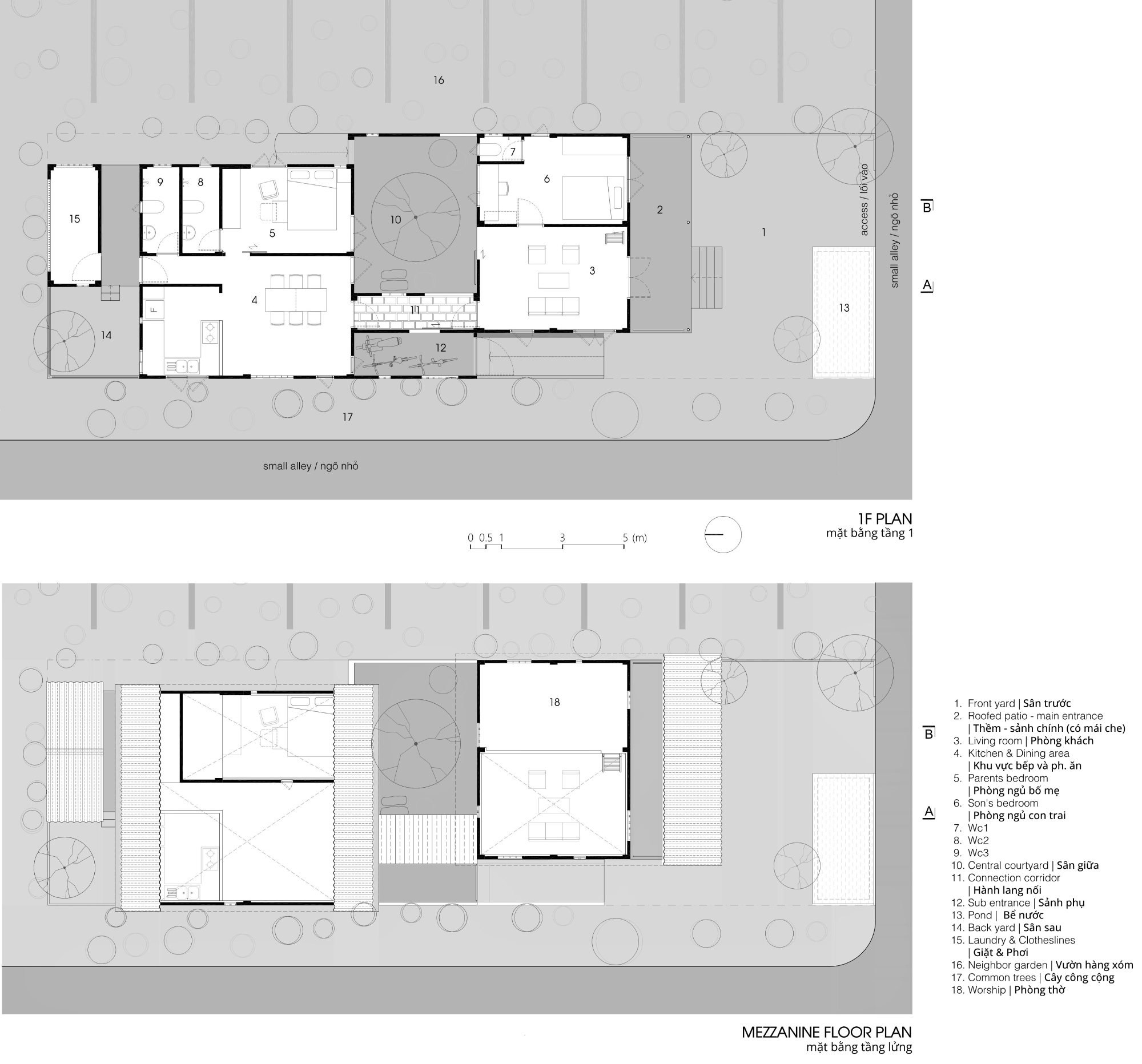
1. Front Yard
2. Roofed patio - Main
Entrance
3. Living room
4. Kitchen - Dining area
5. Parents bedroom
6. Son's bedroom
7. Wc 1
8. Wc 2
9. Wc 3
10. Central courtyard
11. Connection corridor
12. Sub Entrance
13. Pond
14. Back yard
15. Laudry - Clotheslines
16. Neighbor garden
17. Common trees
18. Worship
The positioning two main volumes separately by the central courtyard creates voids interspersedly and interleavedly because there are also blank spaces at other sides of these volumes, allowing the winds to go through these spaces then penetrate interior areas. From these two main spatial blocks, family members are able to see the sights around the house or in the courtyard, where can be also the playing place for children if they do not want to organize so far or their parents do not allow them to go out of home.
The house was planned to build up by concrete structure and concrete masonry bricks within a reasonable cost. Timber is not so cheap, however, there was a good information for the architect which is the owners have preserved a sufficient amount before to make doors and windows someday, and it is the time to use; along with the reusing old furnitures as just mentioned.